
Check Conversion is Moving to the Back Office
May 2007
By Charla L. Hausler and James E. Michel, Barnes & Thornburg LLP
Now more than ever, retailers are processing customers’ checks electronically. Image exchange or electronic check conversion via the Automated Clearing House (ACH) network are valid options. Back Office Conversion (BOC), which goes into effect on March 16, 2007, will provide retailers with a new option in check conversion.

Electronic Check Conversion: A Retailer’s Options
Processing paper checks can be expensive and inefficient. Handling, delivery, collection and fraud lead to increased costs and inefficiencies. Converting checks to electronic payments allows retailers to reduce labor and processing costs, minimize fraud, and get money faster.
Check conversion through the ACH Network is governed by the ACH Rules established by the National Automated Clearing House Association (NACHA). Before BOC, retailers had one option for converting checks received at the point of sale: Point of Purchase transactions (POP). Some retailers have found that POP is not the right option for their business due to training and implementation costs. POP requires that checks be converted to ACH transactions at the point of sale. Retailers must provide equipment to each cashier and ensure that POP requirements are being followed.

The Nuts and Bolts of BOC
With BOC, checks can be converted in a back office setting, rather than at the point of sale. Checks eligible for conversion include consumer and business checks in the amount of $25,000 or less that do not contain the “Auxiliary On-Us” field.
Customer authorization is required before a check can be converted into a BOC transaction. A retailer obtains authorization by providing a notice that informs customers that the retailer is authorized to use information from the check to make a one-time electronic funds transfer from the customers’ account. A copy of the notice must also be provided to customers at the time of sale. A telephone number that is answered during normal business hours must be made available for customer inquiries.
Until January 1, 2010, retailers must also notify customers that funds can be withdrawn from a customers’ account that same day and that customers will not receive the check back from their bank.
Notices to customers must be posted in a prominent and conspicuous location. A retailer must also provide an opt-out option, such as allowing customers to use a different form of payment such as a credit card.
Retailers must create an electronic image of the check and retain the image for at least two years. The original check must be securely stored until it is destroyed.

Deciding What’s Right for Your Business
Retailers should consider the advantages and disadvantages of BOC before deciding if it is the right method of electronic check conversion for their business.
There are several questions which can aid merchants in making the decision:
• Can the merchant safely retain the check until destruction?
• What percentage of the staff will need training?
• Would the cost of staff training be economically viable?
• Is the current staff appropriate to conduct back office conversion?
• How much would the equipment cost?
• Is there enough space available for the required equipment?
• What is the volume of paper checks that the business handles?

Before implementing any check conversion option, retailers need to be aware of requirements imposed by the ACH Rules, as well as applicable federal and state laws. Complying with these laws and the ACH Rules will reduce a retailer’s risk of potential liability and fines. It may also prevent a retailer from being an easy target for fraud.
BOC may be a viable alternative for many retailers in the check processing world. NACHA estimates the potential market size for BOC to be one to four billion payments annually by 2010. With BOC, more businesses may now benefit from electronic check conversion.
The articles and content posted on this blog are intended for general informational purposes only and are not to be construed as legal advice or legal opinion on any specific facts or circumstances.


 However, the new BOC process carries the added responsibility of what to do with the paper check after the electronic transfer has been completed. Retailers are required to keep an image of the check for at least two years, but may dispose of the actual paper at any time. (Under previous point-of purchase processes, the check was electronically imaged at each POS station and the paper check was returned to the consumer.) “There is a risk, potentially a big liability, with BOC—namely the retailer will be [accountable] for anything that happens with a check,” noted Charla Hausler, an associate in the Chicago office of Barnes & Thornburg, which is ranked among the 100 largest law firms in the United States. “Retailers will have to implement good security procedures. Checks may be locked in a safe for a period of time and then shredded, but there have to be policies in place for when and how the paper is destroyed.” Additionally, the image and information that was electronically captured must be held in a secure, preferably encrypted, database.
 Armed with this understanding, financial institutions will be better able to protect themselves from loss. ACH transactions are governed by the National Automated Clearing House Rules (ACH Rules). In addition to the ACH Rules, ACH transactions may be governed by federal and state law, such as Regulation E and Article 4A of the Uniform Commercial Code (UCC). The ACH Rules and applicable laws set out different rights and obligations for financial institutions.
 Even with a proper agreement in place, an ODFI may find itself in a position where it is unable to collect from the Originator, such as in cases where the ODFI files bankruptcy. Therefore, ODFIs must also take steps to know their customer. ODFIs should make certain that their customers are credit-worthy and involved in reputable business practices.



 BOC: The Rival to POP
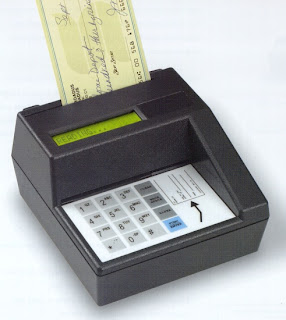 Using the BOC method, the retailer retains the original check. This is in contrast to the POP practice. In the back office or any other centralized location, the retailer captures data from the check in order to present it to the customer’s bank for collection. The retailer must also make an electronic image of the check and retain the image for at least two years. The original check must be securely stored until it is destroyed by the retailer.
